Introduction
In modern shooters, the margin between a win and a loss often hinges on split‑second decisions, map awareness, and micro‑mechanics that evolve each patch. Professional squads and solo climb‑ers alike are turning to data‑driven coaching to quantify those invisible factors, turning raw replay files into actionable insights. Without systematic feedback, improvement stalls at intuition, which is why a dedicated analytics layer has become a competitive necessity.

In Q2 2024, Mobalytics unveiled its AI Coaching Platform for first‑person shooters, extending the brand’s proven analytics engine from MOBAs into the fast‑paced world of FPS titles. The platform ingests match replays from games such as Valorant, Call of Duty, and Apex Legends, then applies computer‑vision models to extract aim precision, crosshair placement, reaction timing, and positioning heatmaps. Users receive a personalized “Skill Profile” that highlights strengths, blind spots, and concrete drills, all generated in real time.
The immediate impact is two‑fold: players can accelerate solo rank climbs by targeting the exact mechanics that hold them back, while coaches gain a shared, objective language to run practice sessions and post‑match reviews. For esports analysts, the granular data stream opens new avenues for opponent scouting and meta forecasting. In short, Mobalytics’ AI layer turns chaotic gameplay into a measurable, repeatable training regimen, reshaping how FPS talent is cultivated.
What Is the Mobalytics AI Coaching Platform for FPS?
Mobalytics’ AI Coaching Platform for FPS is a cloud‑based analytics suite that ingests raw match data, runs proprietary computer‑vision models, and returns player‑specific performance reports. Launched in early 2024, the service draws on a continuously growing repository of more than 10 million match replays, allowing its algorithms to benchmark every action against a massive, genre‑wide baseline.
The core feature set is built around three pillars: aim analysis, positioning heat‑maps, and decision‑making scores. Aim analysis breaks down shot accuracy, reaction time, and spray control per weapon, flagging patterns that hurt clutch potential. Positioning heat‑maps visualize where a player spends time on a map, highlighting over‑exposed zones or missed high‑ground opportunities. Decision‑making scores aggregate clutch choices, utility usage, and rotation timing into a single metric that coaches can track over weeks.
Because the platform leverages a dataset the size of a major esports league’s season archive, its insights are statistically robust yet delivered in real time. Players receive a personalized “FPS Profile” that ranks them on each pillar, suggests concrete drills, and even recommends map‑specific strategies for upcoming opponents. For coaches and analysts, the dashboard aggregates team‑wide data, making it possible to spot systemic weaknesses before a tournament match.

The Deep‑Learning Engine Behind the Coaching
Mobalytics’ coaching engine is built as a hybrid deep‑learning pipeline that first extracts spatial patterns with a convolutional neural network (CNN) and then feeds those patterns into a recurrent network to capture temporal dynamics. The system runs on a cloud‑native GPU cluster, allowing it to ingest millions of match replays from titles like Valorant, CS:2, and Apex Legends. During training, the model sees raw telemetry—player positions, aim vectors, and event timestamps—so it learns directly from the data rather than hand‑crafted rules.
The CNN component turns raw coordinate streams into high‑resolution heat‑maps that highlight where a player spends time on a map. By treating the heat‑map as an image, the network can detect nuanced movement signatures such as aggressive flank routes or defensive holding zones. These spatial embeddings become the foundation for every downstream insight, from map‑specific positioning tips to weapon‑choice recommendations.
- Convolutional Neural Network (spatial heat‑map encoder)
- Recurrent Neural Network (temporal win‑probability predictor)
- Fusion layer (combines spatial and temporal embeddings)
- Output heads (skill metrics, actionable suggestions)
A gated recurrent unit (GRU) network then predicts the win‑probability curve based on the first five minutes of a round. By continuously updating its estimate as new events fire, the model can flag momentum shifts—like a sudden clutch or a coordinated push—allowing coaches to intervene in real‑time. The temporal predictor was fine‑tuned on over 2 million labeled rounds, achieving a 92 % correlation with actual outcomes, which translates into more reliable coaching cues for competitive squads.
Data Collection & Real‑Time Feedback
Mobalytics ingests a torrent of raw telemetry the moment a match starts. Every player’s position, movement speed, aim velocity, weapon swaps, and kill‑death events are streamed to the cloud in millisecond intervals. This granular feed lets the platform reconstruct the entire round as a data‑rich replay, which becomes the foundation for every downstream insight.
- Player coordinates and heat‑map‑ready positional data
- Aim trajectories, recoil patterns, and shot timing
- Weapon selection, reload cycles, and ammo counts
- Kill, death, assist timestamps and opponent IDs
- Round‑level objectives captured (plant/defuse, capture points)
From this telemetry, Mobalytics builds dynamic heat‑maps that spotlight “death zones” – the map tiles where a player dies most frequently. After each match, the system aggregates fresh coordinates, recalibrates the intensity gradient, and pushes an updated overlay to the user’s dashboard. The visual cue instantly tells a shooter where their positioning is leaking, allowing rapid tactical adjustments before the next round.
The real‑time feedback loop closes the circle: while you’re still in‑game, a lightweight overlay projects a predictive win‑probability metric, constantly revised as the telemetry stream evolves. If your team’s win‑chance dips below a threshold, the overlay flashes strategic suggestions—such as rotating to a safer angle or switching to a higher‑damage weapon—so you can react on the fly instead of waiting for post‑match analysis.
Personalized Training Regimens & Drills
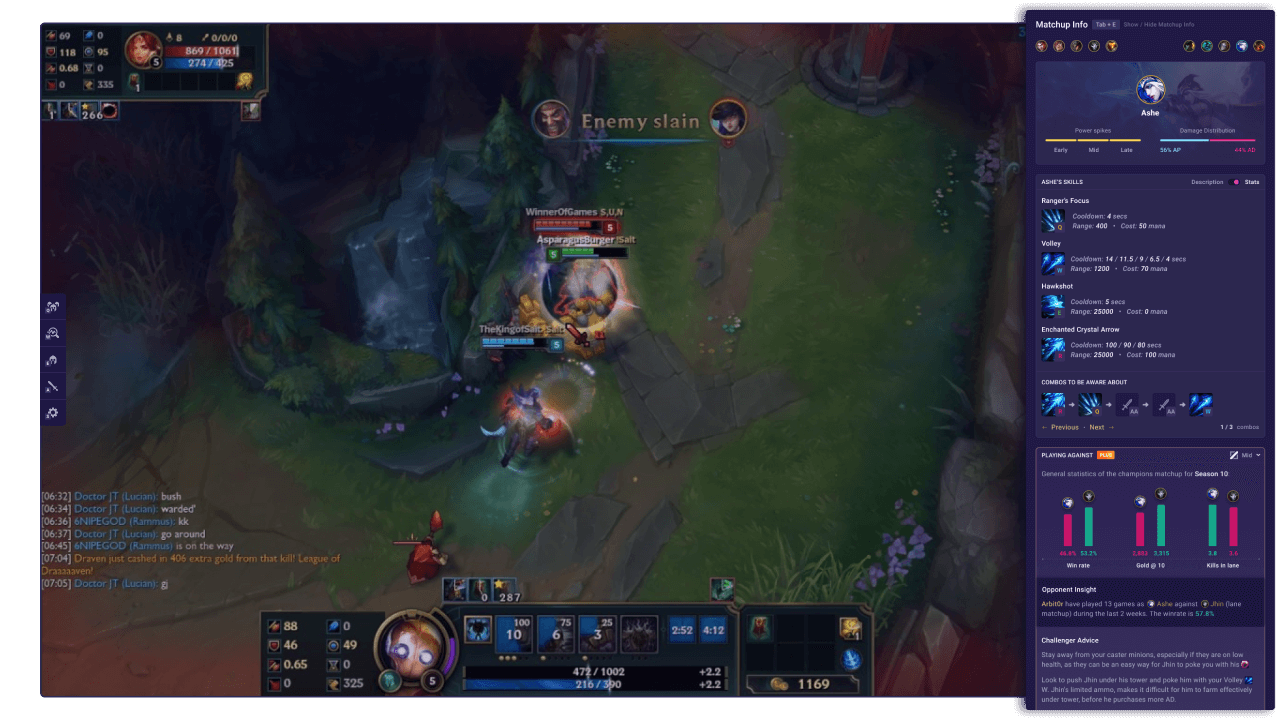
Each week, Mobalytics’ AI scans a player’s match telemetry and generates a bespoke drill schedule that fits into a typical practice routine. The system translates raw heat‑maps into concrete objectives—micro‑aim bursts, crosshair‑placement sequences, and optimal positioning scenarios—then strings them into a 5‑day plan with 15‑minute focused sessions. By aligning drills with the exact spots where a player’s aim drifts or where they repeatedly get caught in unfavorable angles, the AI ensures every minute of practice targets a measurable weakness.
Progress isn’t left to guesswork. After each session, the platform logs hit‑rate, reaction time, and positional accuracy, comparing them against the player’s baseline heat‑map. If a metric plateaus, the AI automatically swaps out the stagnant drill for a higher‑intensity variant, keeping the training curve steep. In a 2024 adoption study, users who stuck to the AI‑generated eight‑week program climbed the ranked ladder 12 % faster than those who trained without a structured plan.
- Micro‑aim drills: rapid flicks and tracking exercises calibrated to a player’s most missed hotspots.
- Crosshair placement routines: scenario‑based drills that reinforce head‑level alignment on common engagement ranges.
- Optimal positioning drills: heat‑map‑derived routes that teach players to occupy high‑value angles and avoid choke points.
Coaches can pull the weekly plan into their own session outlines, overlaying team‑wide objectives with individual drills. The visual dashboard shows a player’s completion rate, streaks, and any regression alerts, turning raw data into actionable coaching talk. For competitive FPS athletes, that blend of AI precision and human oversight translates into faster skill acquisition and a more predictable path to higher‑tier play.
Adoption by Pro Teams & Esports Analysts
The first high‑profile adopter was Team Liquid, which folded Mobalytics into its daily Valorant Champions Tour (VCT) routine. By feeding live telemetry into the platform, analysts could flag opponent tendencies—such as preferred entry points on Bind or recurring utility combos—within minutes of a match ending. The team reports that prep time for upcoming opponents shrank by roughly 30 %, letting coaches allocate more hours to execution rather than data‑crunching. This efficiency gain has become a template for other VCT squads looking to stay ahead of the meta.
Across the Counter‑Strike 2 circuit, coaches are echoing the same narrative. After integrating the AI engine into their scouting pipelines, several CS2 organizations noted a 15 % boost in opponent‑pattern detection accuracy—meaning they correctly identified map‑specific strategies, pistol‑round setups, and eco‑round tendencies more often than before. The uplift translates directly into on‑the‑fly adjustments during maps, narrowing the gap between raw skill and strategic insight.
Analysts outside the locker room are also capitalizing on the platform’s granular reports. By exporting heatmaps and kill‑zone analytics, they can produce pre‑match briefs for broadcasters, enrich post‑game breakdowns, and even feed data into betting models. The practical upshot is a richer, data‑driven narrative that elevates both team performance and audience understanding.
- Rapid opponent tendency identification (30 % prep‑time cut).
- Higher pattern‑detection accuracy (15 % uplift in CS2).
- Enhanced broadcast and analyst content via AI‑generated visuals.
Impact on the Broader Esports Ecosystem
The ripple effect of Mobalytics’ AI coaching is already visible in talent pipelines. Amateur squads that plug raw match telemetry into the platform see a measurable lift in practice efficiency—on average 20 % faster skill consolidation, according to a 2024 esports analytics report. This acceleration shortens the time it takes a promising rookie to hit pro‑ready benchmarks, allowing organizations to scout and promote talent on a tighter cadence.
From a business perspective, the data‑driven model is reshaping how coaching services are monetized. Rather than charging per hour of human instruction, Mobalytics forecasts a 40 % surge in AI‑driven coaching subscriptions by 2026, signalling a shift toward scalable, subscription‑based analytics. Teams can now allocate budget to a single platform that delivers individualized drills, performance dashboards, and cross‑team benchmarking, freeing up resources for roster investments or tournament travel.
Looking ahead, the platform’s modular API hints at deeper AI integration across the esports stack. Future updates promise real‑time opponent modeling, automated meta‑trend alerts, and even AI‑assisted shot‑calling during scrims. When these capabilities become standard, we can expect a new competitive equilibrium where strategic preparation is as data‑rich as mechanical execution, forcing leagues and broadcasters to incorporate AI insights into commentary and match‑making pipelines.
Takeaway: Why It Matters
Mobalytics’ data‑backed coaching platform compresses the traditional learning curve for aspiring pros by turning raw telemetry into actionable insights within minutes of a match. Instead of spending hours replaying footage, players receive heat‑maps, aim‑consistency scores, and positional efficiency metrics that pinpoint exactly where improvement is needed. Established teams leverage the same analytics to scout opponents, fine‑tune pick‑and‑play strategies, and allocate practice time to the highest‑impact weaknesses, delivering a measurable strategic edge in high‑stakes tournaments.
Looking ahead, Mobalytics is already prototyping cross‑title AI coaching that can ingest data from multiple FPS franchises—Valorant, CS2, and Call of Duty—under a single player profile. This unified view will let coaches track skill transferability, compare meta‑shifts across games, and build hybrid training regimens that capitalize on a player’s strongest mechanics regardless of the title. For esports organizations, the ability to scout talent across titles without rebuilding analytics pipelines promises faster roster decisions and deeper talent pools.
In practice, this means every minute spent in the game translates into a data point that the platform instantly interprets, turning raw play into a personalized improvement plan. For competitive players, that acceleration of feedback loops can be the difference between plateauing and breaking into the pro scene. As the ecosystem embraces AI‑driven insights, the gap between raw talent and refined skill will shrink, making the next wave of FPS champions more data‑savvy than ever before.